
Blog
Installing Built-In Bookcases in Older Homes: What Carpenters Actually Do
Built-in bookcases are a classic feature that adds character, storage, and value to any home, especially in the historic neighborhoods of Brookline. However, installing them in older homes presents unique challenges that off-the-shelf units simply can’t handle. From uneven walls to integrating with existing trim, skilled finish carpentry is essential for a seamless, custom look.
Understanding the process helps homeowners appreciate the craftsmanship involved in creating these timeless pieces. This guide dives into the actual steps professional carpenters take to ensure your built-in bookcases look like they’ve always been part of your home.
*Pricing varies based on project scope, materials selected, and site conditions. Contact us for a personalized estimate.
Why Built-In Bookcases Excel in Older Homes (Where Freestanding Fails)
Older homes in Brookline, often rich in history and charm, rarely feature perfectly straight walls or level floors. This is where the advantage of a custom built-in bookcase truly shines. Unlike freestanding units, which highlight every imperfection, built-ins are designed to adapt and integrate.
The primary issue with older plaster walls is their inherent unevenness. Homes built before 1940 can have walls that are out of plumb by as much as 1/2 inch over an 8-foot span, according to historical building surveys. A standard, rectangular freestanding bookshelf would either leave unsightly gaps or wobble precariously. Built-ins, however, are tailored on-site to these unique dimensions, ensuring a flush fit that looks intentional and structurally sound. They also allow for seamless integration with existing baseboards and crown molding, maintaining the architectural integrity of the room.
- Seamless Integration: Custom units blend with existing architecture, matching trim and molding profiles.
- Maximized Space: Built-ins utilize every inch, often fitting into alcoves or spanning entire walls, providing more storage than standalone pieces.
- Enhanced Home Value: A well-executed built-in is considered a permanent fixture, adding significant aesthetic and resale value.
- Stability: Anchored directly to wall studs, built-ins offer superior stability, especially important in earthquake-prone areas or homes with children and pets.
Precision Site Measurement and Scribing Techniques
The foundation of any successful built-in bookcase installation in an older home is meticulous measurement and the art of scribing. Carpenters begin by taking precise measurements of the space, not just length and width, but also checking for plumb, level, and square at multiple points. High-precision laser levels are often employed to detect subtle variations that are invisible to the naked eye.
Once the main carcase (the box structure) is constructed, the real magic happens: scribing. Scribing is the technique of carefully shaping the edges of the bookcase to perfectly match the contours of an irregular wall or floor. This involves placing the unit against the uneven surface, using a compass or a specialized scribing tool to trace the wall’s profile onto the bookcase material, and then carefully cutting along that line. This process ensures zero gaps between the built-in and the existing structure, creating that coveted “built-in” appearance. As detailed by Family Handyman, “Scribing is a crucial skill for fitting cabinets and trim against irregular surfaces, turning a challenging fit into a seamless join.” Without this technique, even the most expensive materials would look ill-fitting and unprofessional.
Carcase Construction: Plywood vs. MDF
The choice of material for the carcase (the main structural box) is critical and depends on the project’s budget, desired finish, and long-term durability goals. Two common options are cabinet-grade plywood and Medium-Density Fiberboard (MDF).
Plywood: Typically made from thin layers of wood veneer glued together, plywood offers superior strength, stability, and screw-holding power. It’s less prone to sagging under heavy loads, making it an excellent choice for bookshelves that will hold many books. High-quality birch or maple plywood can be stained beautifully, showcasing natural wood grain. However, plywood is generally more expensive, with cabinet-grade sheets costing 50-70% more than comparable MDF sheets*.
MDF: An engineered wood product made from wood fibers pressed together with resin, MDF is very dense and stable, offering an incredibly smooth surface ideal for painting. It’s often chosen for its cost-effectiveness and consistency, as it has no knots or grain. While MDF is heavier and can be more susceptible to moisture damage if not properly sealed, it provides a flawless canvas for painted finishes. For projects where the final look is painted and budget is a consideration, MDF can be an excellent choice.
A professional finish carpentry service can help you weigh the pros and cons for your specific built-in bookcase installation, ensuring the right material is chosen for your aesthetic and functional needs.
The Finishing Touch: Face Frames, Crown Molding, and Baseboard Integration
What truly distinguishes a custom built-in bookcase from a mass-produced unit are the finishing details. After the carcase is leveled, scribed, and secured, the face frame is added. This solid wood frame covers the exposed edges of the plywood or MDF carcase, providing a clean, finished appearance and increasing the rigidity of the unit. The face frame is typically made from solid hardwood, even if the carcase is plywood or MDF, to ensure crisp edges and durability.
The next crucial step is integrating the built-in with the room’s existing architectural trim. This means matching or complementing the existing crown molding and baseboards. Carpenters will meticulously cut and fit new crown molding to flow seamlessly from the built-in to the wall, creating the illusion that the bookcase has always been there. Similarly, the baseboard is either extended around the bottom of the unit or new baseboard is crafted to match the existing profile and run continuously across the front of the built-in. This level of detail is a hallmark of high-quality finish carpentry, as outlined in publications like Fine Homebuilding, which emphasizes the importance of “matching existing profiles for a truly custom appearance.” This careful integration ensures the built-in feels like an organic part of the home’s structure, rather than an added piece of furniture.

Paint vs. Stain: Choosing the Right Finish
The final aesthetic decision for your built-in bookcase is whether to paint or stain it. This choice significantly impacts the material selection and the overall look of the room.
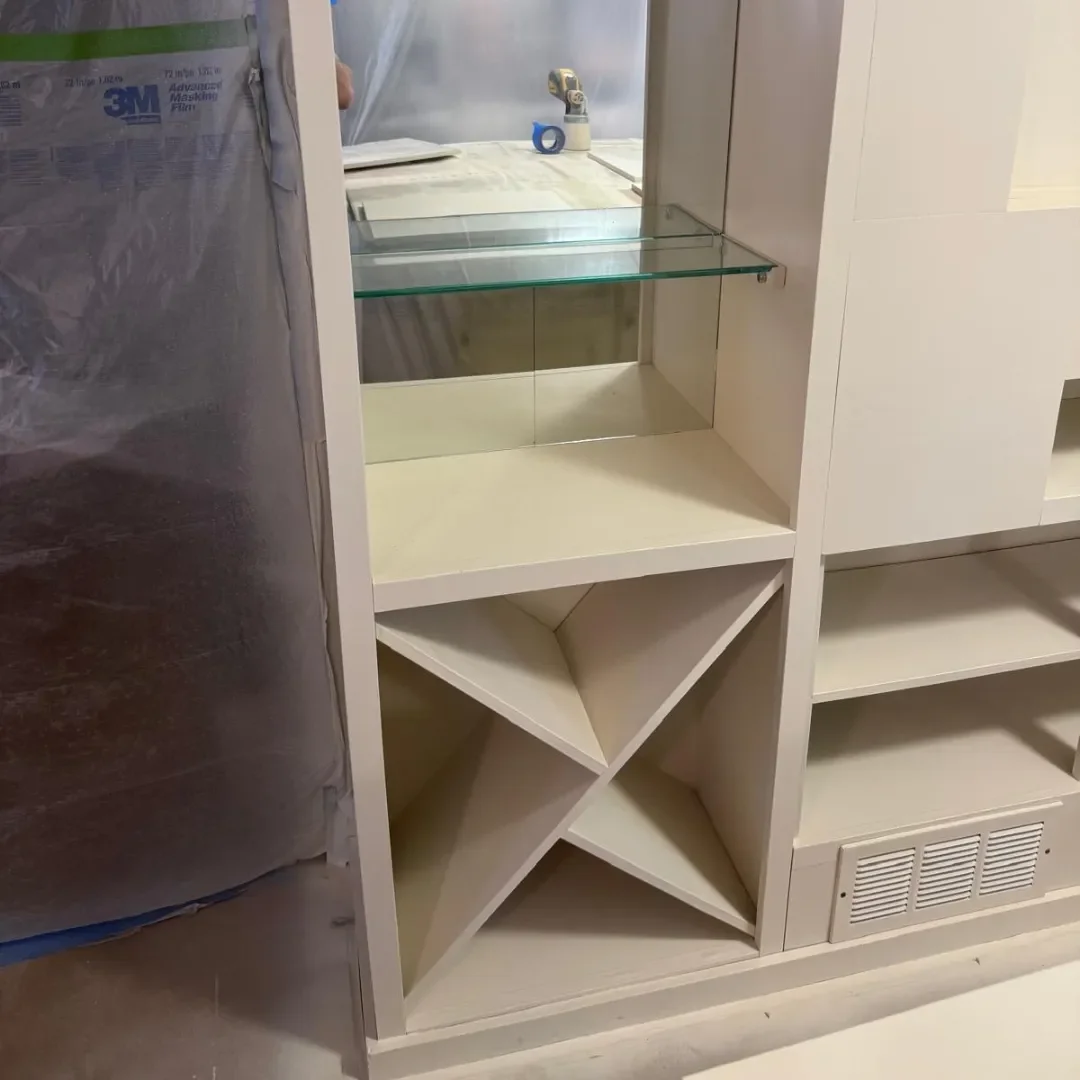
- Painting: Paint is an excellent choice for built-ins, especially if you want them to blend seamlessly with your existing wall color or if you’ve used materials like MDF for the carcase. Paint provides a crisp, uniform finish that can hide minor imperfections in the wood or engineered materials. It offers a vast palette of colors, allowing for complete customization to match your interior design. For a truly professional look, the painting process should involve proper priming, sanding between coats, and using high-quality paint for durability. ALP Home Services offers expert interior painting services to ensure a flawless finish for your newly installed built-ins.
- Staining: Staining is ideal if you want to showcase the natural beauty of real wood. This option works best when the entire carcase and face frame are constructed from a stain-grade hardwood like oak, maple, or cherry. Stains penetrate the wood, enhancing its grain patterns and providing a rich, warm finish. It’s crucial to select a wood species with an appealing grain if you plan to stain, as engineered woods like MDF do not take stain well. A clear topcoat, such as lacquer or polyurethane, is then applied to protect the stained surface and provide durability.
The choice between paint and stain should be made early in the design process, as it dictates the material selection and preparation methods.
FAQ
Common questions about built-in bookcase installation for homeowners in Brookline and surrounding areas.
What are the benefits of built-in bookcase installation over freestanding units?
Built-in bookcases offer seamless integration with your home’s architecture, maximize space, provide superior stability, and significantly enhance your property’s value. They are custom-fitted to your walls, unlike freestanding units that can leave gaps or look out of place in older homes with uneven surfaces.
How long does it take to install a custom built-in bookcase?
The duration depends on the complexity and size of the unit. For a typical wall-spanning bookcase, the on-site carpentry work can take 3-5 days. This does not include design, material acquisition, or a separate painting/staining phase, which can add more time to the overall project timeline.
Do I need to worry about uneven walls in an older home?
Yes, older homes often have walls that are out of plumb or uneven. A professional carpenter uses techniques like scribing and shimming to ensure the built-in bookcase fits perfectly and looks flush against these irregularities, making it appear as if it was always part of the house.
What materials are best for built-in bookcases?
The best materials depend on your desired finish and budget. Cabinet-grade plywood offers strength and durability, ideal for staining. MDF provides a smooth, cost-effective surface perfect for painting. Often, a combination of materials is used, such as MDF for painted shelves and solid hardwood for face frames.
Can built-in bookcases be painted to match my existing trim?
Absolutely. Painting is a popular choice for built-ins, allowing them to match existing trim or wall colors for a cohesive look. Professional painters ensure a smooth, durable finish that blends seamlessly with your home’s interior design.
Is ALP Home Services licensed and insured for finish carpentry?
Yes, ALP Home Services is fully licensed and insured, providing peace of mind for all your home improvement projects, including custom finish carpentry and built-in installations.
Explore Our Services
- Professional Finish Carpentry in Greater Boston
- Expert Interior and Exterior Painting Services
- High-Quality Flooring Installation and Repair
- Custom Tile Installation for Kitchens and Bathrooms
- Enhancing Your Somerville Home with Custom Finish Carpentry
- Your Checklist for a Successful Home Improvement Project in Malden
Ready for Custom Built-In Bookcases in Your Brookline Home?
If you’re considering enhancing your home with custom built-in bookcase installation, turn to the experienced team at ALP Home Services. We understand the unique demands of older homes and provide the precision finish carpentry needed to create beautiful, functional, and integrated storage solutions. Get a personalized estimate today.
Prefer to dial directly? +1 (866) 254-3597