
Project Spotlight · Back Bay, Boston
Rooftop Deck Sealing in Back Bay, Boston: Before and After on a Mahogany Deck
This rooftop terrace sits high above Boston’s Back Bay, with the John Hancock Tower and the neighborhood’s church spires right past the railing. The decking, the steps around the hot tub and the tall privacy screens are all mahogany, and years of sun, wind, rain and snow had turned every board a flat, silvery gray.
This job was not about giving the deck a new color. It was about protecting a hardwood deck that was already beautiful. We sealed it with C2 Guard for Wood, a penetrating waterproofer and sealer, tinted in the semi-transparent color Yukon. Below are the before and after photos, the product we used, how this kind of sealer goes on, and why we chose a sealer instead of paint or a solid stain.
- Location: Back Bay, Boston, MA (Suffolk County)
- Wood: Mahogany decking, steps and privacy screens on a rooftop terrace
- Service: Rooftop deck sealing
- Material: C2 Guard for Wood (G4000), a penetrating, semi-transparent sealer in the color Yukon
Where we started: mahogany weathered to gray
Mahogany is a dense, naturally durable hardwood, which is why it shows up on so many Boston rooftops. Durable does not mean maintenance free, though. Left unprotected, sunlight breaks down the surface of the wood and it fades from warm brown to gray, and up on a roof there is nothing to shield it from the sun, the wind or the weather.
That was the state of this terrace. The color was gone across the whole deck, from the main decking with the skyline view to the steps by the hot tub and the vertical screens along the walkway.

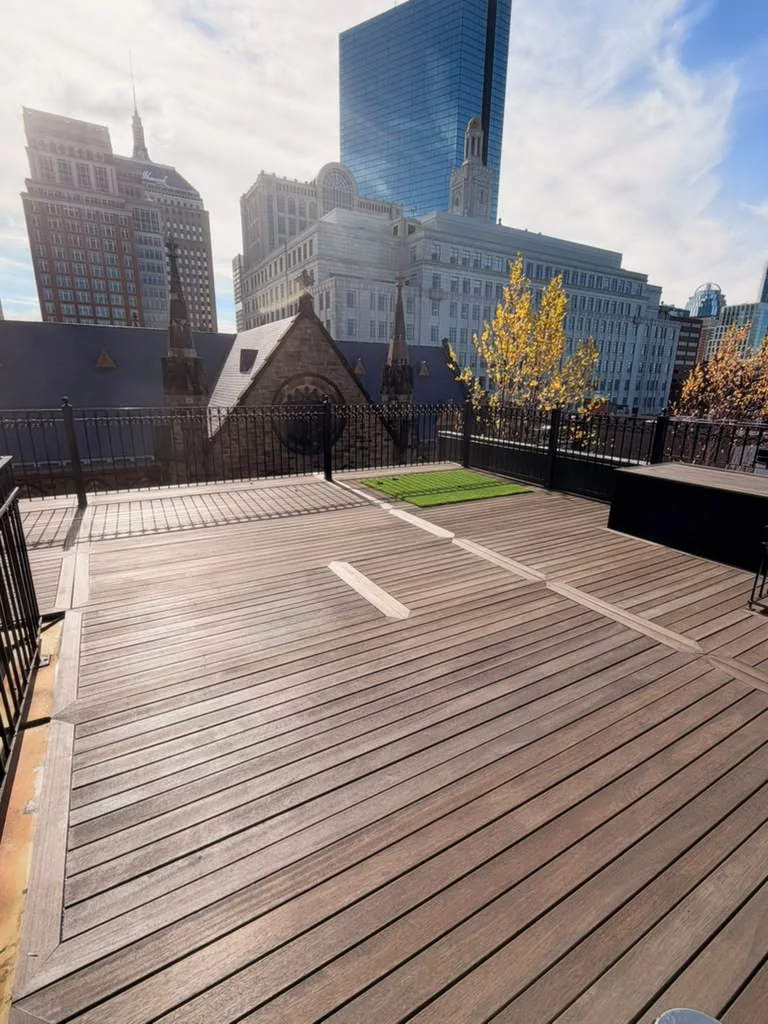
The main deck facing the Back Bay skyline: weathered gray mahogany before, sealed with its warm tone back after.
The material: C2 Guard for Wood in Yukon
For this deck we used C2 Guard for Wood (product G4000), tinted to order in the color Yukon. It is not a paint, and it is not a stain that builds a film on top of the boards. According to C2’s product information, Guard penetrates into the wood to help resist water intrusion while keeping the natural look and texture of the grain, and it helps guard against cracking, splitting and warping.
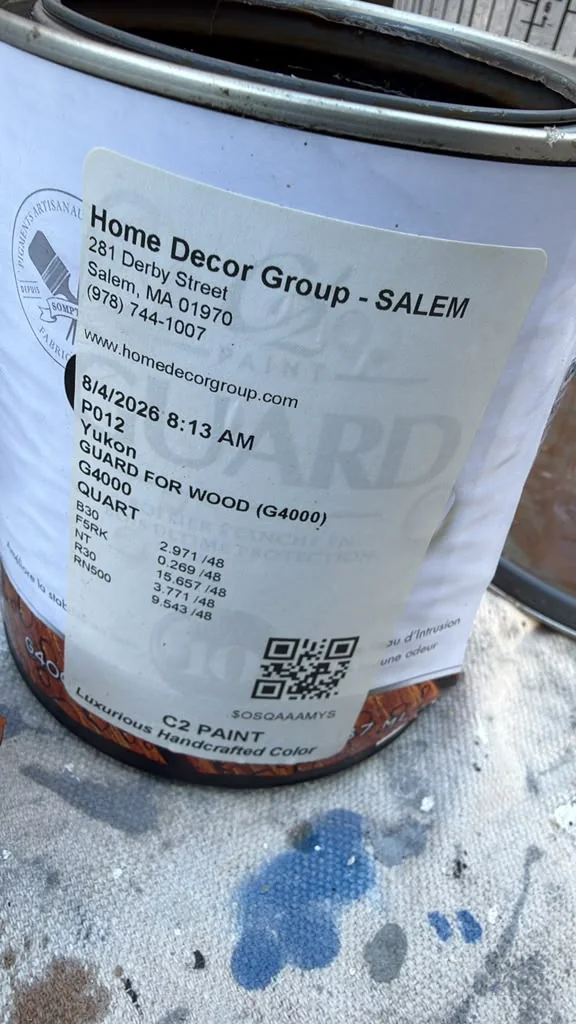
| Type | Penetrating waterproofer and deck sealer, non-film-forming |
|---|---|
| Finish | Semi-transparent (16 colors plus clear). Color on this job: Yukon |
| Base | Water-based, soap-and-water cleanup, under 50 g/L VOC |
| Coats | Two, applied wet-on-damp |
| Coverage | About 300 sq ft per gallon, depending on how porous the wood is |
| Dry time | About 1 hour to the touch, 24 hours before foot traffic |
| Protection | Up to 6 years on decks and other horizontal surfaces, up to 10 years on vertical surfaces (manufacturer’s figures) |
Specs from C2’s product information for Guard for Wood.
Two things about this product matter most on a deck like this one. First, it does not sit on top of the wood as a film, so there is nothing to peel, crack or flake, and the deck can be refreshed later without sanding it down. Second, the color is translucent. C2 notes that the same color looks different on each wood species, so on dense mahogany, Yukon enriches the tone of the wood instead of covering it.
Why the change looks subtle, and why that is the point
Compare the photos and you will see the deck did not turn a new color. The gray is gone and the warm tone of the mahogany is back, but the grain, the board lines and the character of the wood are all still there. That is exactly what a semi-transparent sealer is supposed to do.
A solid stain or a coat of paint would have covered the mahogany completely, which defeats the purpose of building a deck out of it in the first place. The goal here was protection first, with the natural look of the wood intact.
How a penetrating sealer like this goes on
A penetrating sealer only works if it actually gets into the wood. These are the application rules C2 sets for Guard, and they are the reason prep and timing matter as much as the product itself.
Clean wood first
C2 calls for clean wood before application, with mold, mildew and any old stain removed. Slightly damp wood is fine. Dirty wood is not.
The water-drop test
A few drops of water on the board should soak in. If the water beads up on the surface, the sealer will not get in either.
Easy on dense hardwoods
Dense woods resist penetration, and C2 warns that over-applying on them can leave the surface sticky. On hardwood, less is more.
Two coats, wet-on-damp
The second coat goes on while the first is still damp, not dry. According to C2, that is how Guard reaches full penetration.
Shade and the right weather
Best applied out of direct sun, above 35°F and with no rain in the forecast. If the sun cannot be avoided, C2 suggests misting the surface first.
A day before foot traffic
The finish is dry to the touch in about an hour, but the deck stays off limits for 24 hours before anyone walks on it.
More before and after views
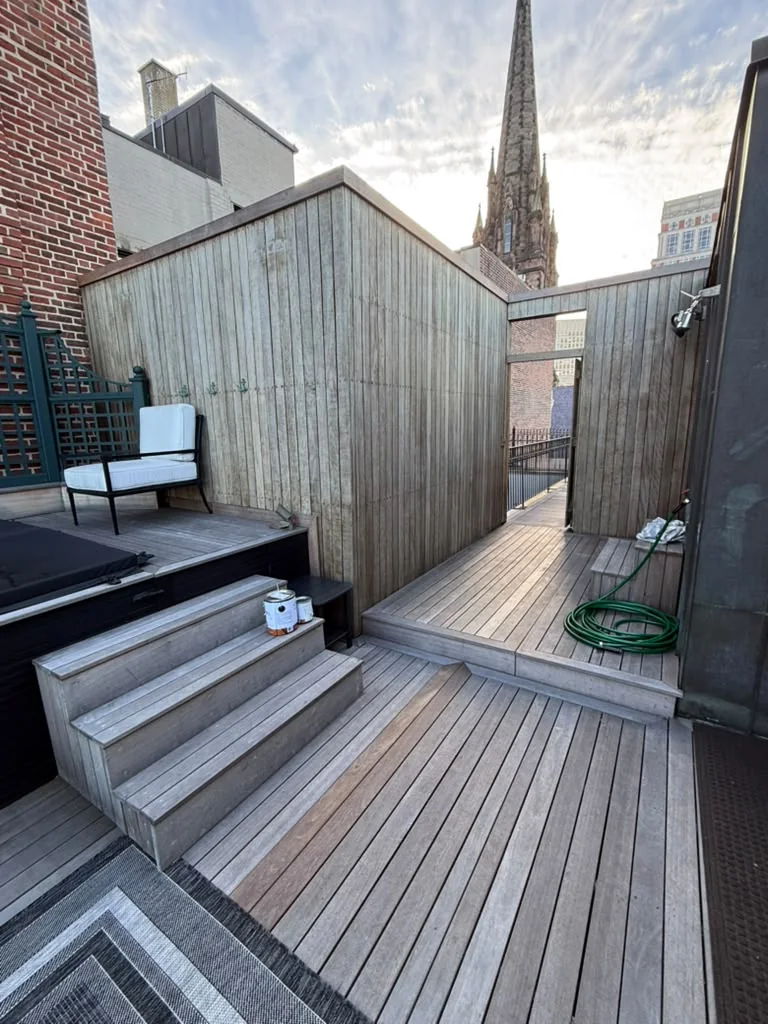
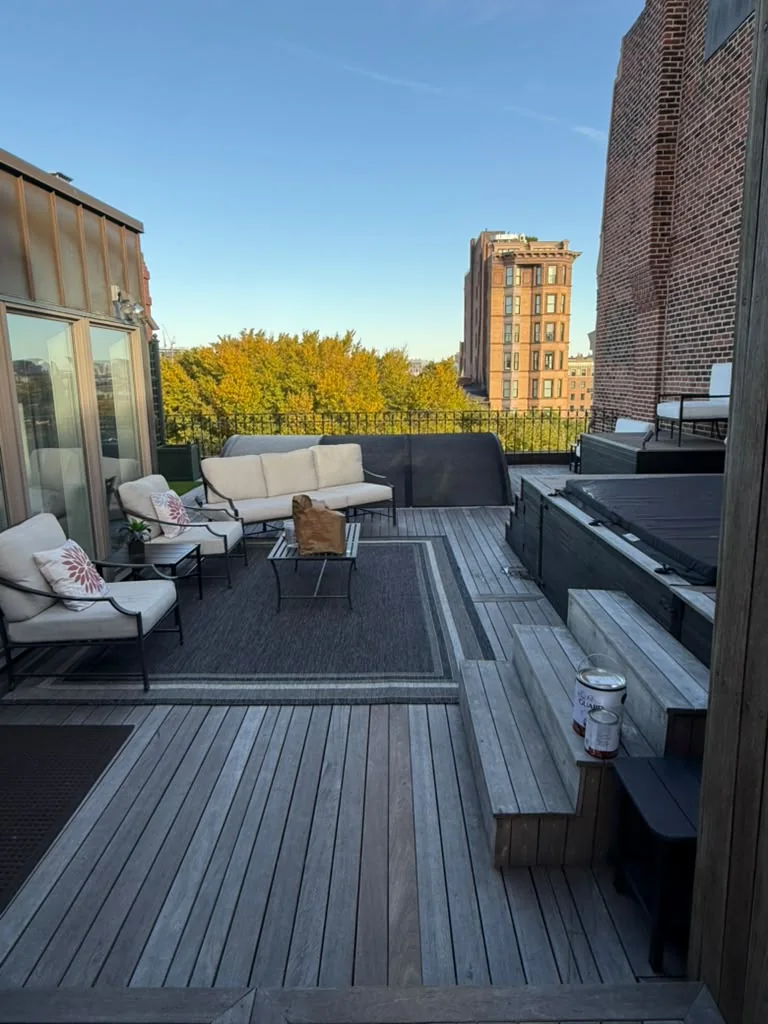
The same treatment went on every wood surface of the terrace: the decking, the steps around the hot tub and the tall privacy screens along the walkway.
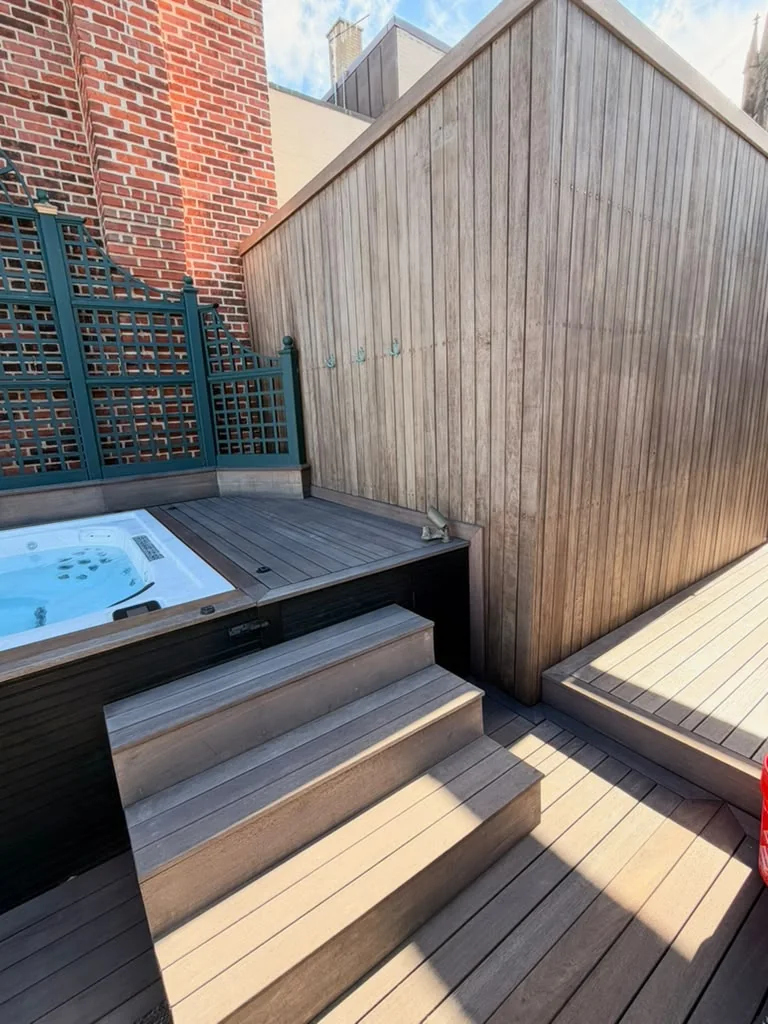
By the hot tub: the gray privacy screen and steps before, the warm mahogany tone after.
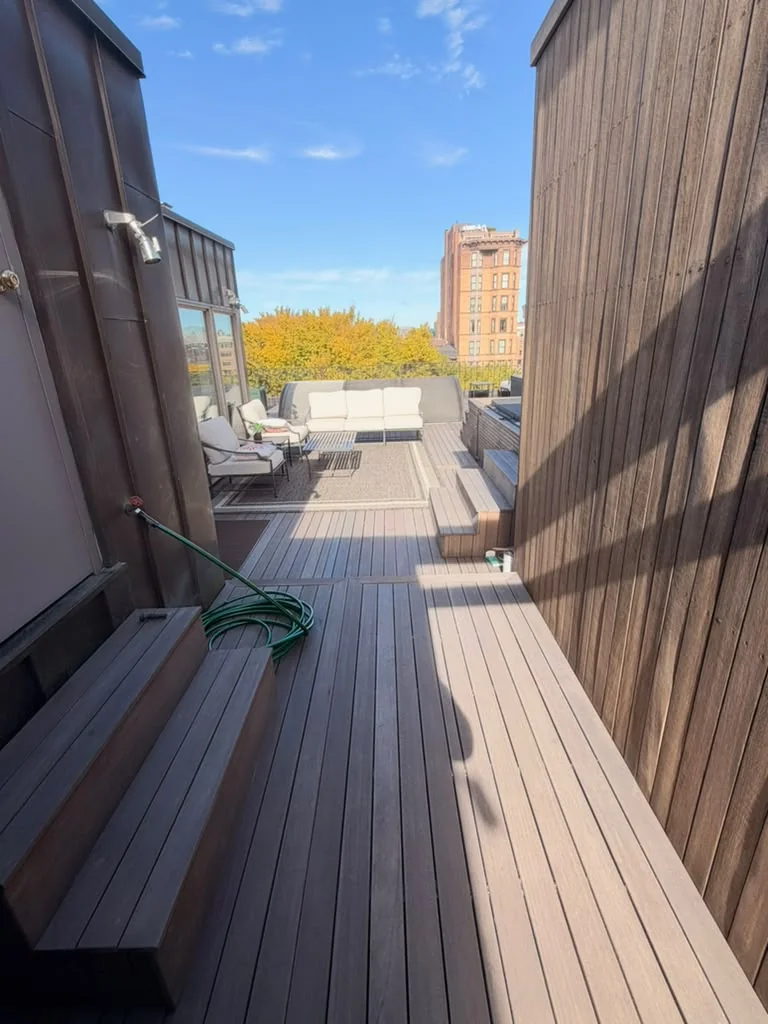
Toward the lounge area: weathered boards and steps before, the sealed walkway and screen wall after.
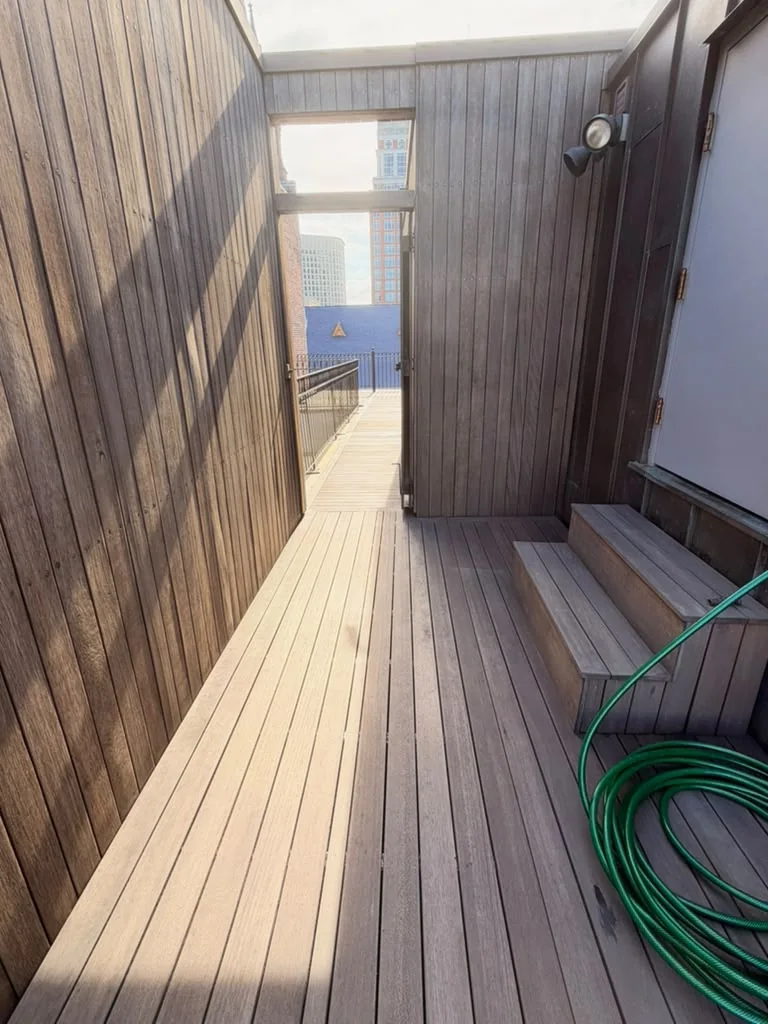
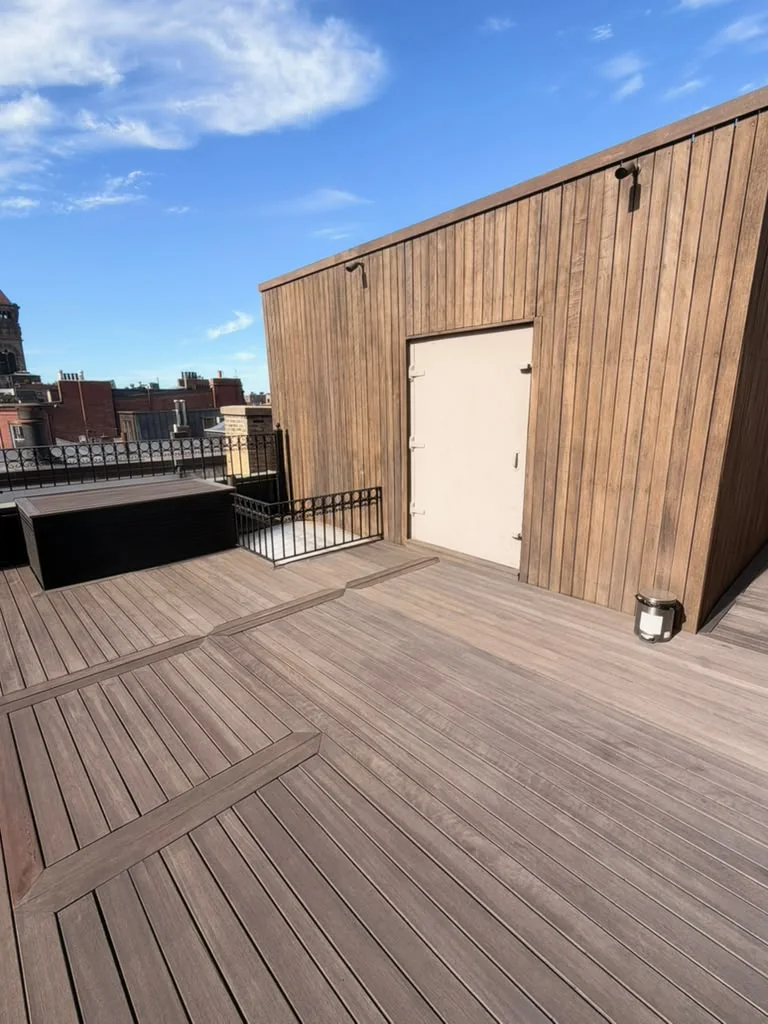
Finished: the walkway out to the gate and the wall around the roof access, sealed in Yukon.
Sealer, stain or paint: what does a mahogany deck need?
- Paint hides the wood and forms a film. On a deck that gets walked on and sits out in the weather, a film can wear through and peel.
- Solid stain also covers the grain. It has its place on worn softwood decks, but it hides what makes a mahogany deck worth having.
- A penetrating, semi-transparent sealer protects from inside the wood. The grain stays visible, and the deck can be refreshed later without sanding.
- Color fades before protection does. C2 notes that sun fades the color over time while the water protection stays, so refreshing a deck means cleaning it and reapplying.
Planning other outdoor work? See our deck painting case study in Newton, learn how to stop peeling paint on a New England exterior, or browse our painting services.
Is your deck turning gray?
We seal, stain and paint decks across Boston and Greater Boston, with the right product for your wood. Licensed and insured, with free estimates.
Frequently asked questions
What is the best way to protect a mahogany deck?
Keep it clean and seal it with a penetrating product that soaks into the wood instead of forming a film on top. On this Back Bay rooftop we used C2 Guard for Wood, a penetrating, semi-transparent sealer, which protects the mahogany from inside and keeps the grain visible.
Does a deck sealer change the color of the wood?
A semi-transparent sealer adds tone without hiding the wood. On this deck, the Yukon color brought back the warm brown of the mahogany while the grain and board lines stayed visible. C2 notes that the same color looks different on each wood species.
Will a penetrating deck sealer peel?
C2 Guard does not form a film on the surface, so according to the manufacturer it is designed not to peel, crack or flake. That also means the deck can be refreshed later without sanding.
How long after sealing can you walk on the deck?
C2 lists Guard as dry to the touch in about an hour, with 24 hours before foot traffic.
How often does a sealed deck need to be redone?
C2 rates Guard for up to 6 years of protection on decks and other horizontal surfaces and up to 10 years on vertical surfaces like fences and screens. The color fades sooner with sun exposure, and refreshing it means cleaning the wood and reapplying.
Do you seal and stain decks in Boston?
Yes. ALP Home Services seals, stains and paints decks across Boston, including rooftop decks like this one in Back Bay, plus Cambridge, Newton, Malden, Arlington and the rest of Greater Boston.
Explore our services
- Interior and Exterior Painting Services
- Custom Finish Carpentry
- See More of Our Completed Projects
- Preparing Your Boston-Area Home for Exterior Painting Before Winter
- Top Tips for Preparing Your Home for Exterior Painting
Get your Boston deck project started
Tell us about your deck and we will walk you through your options, with no pressure and an honest estimate.